Breast cancer remains one of the most common cancers affecting women worldwide. Awareness, early detection, and proper monitoring play a crucial role in improving outcomes and saving lives.
What Is Breast Cancer?
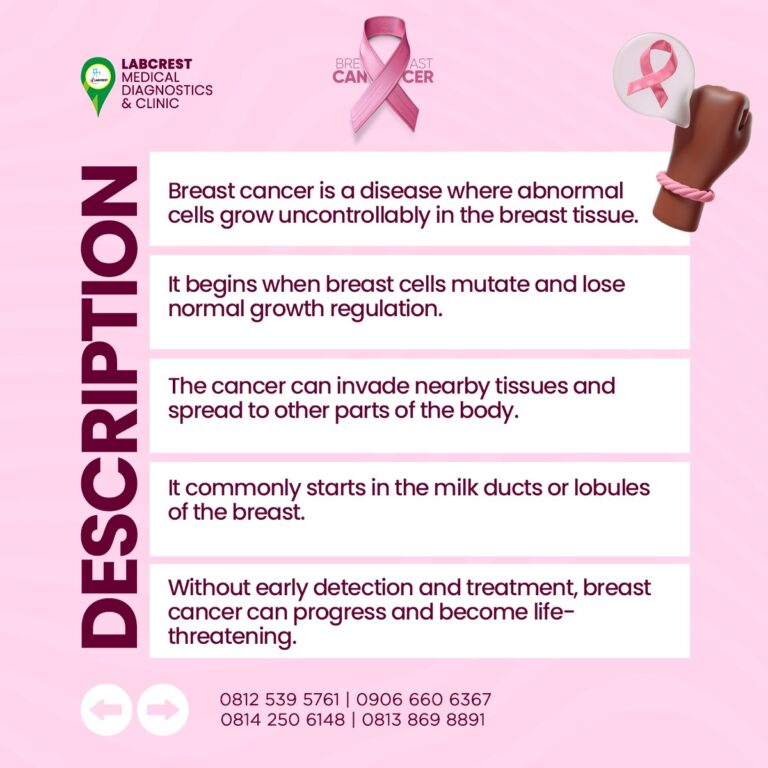
Breast cancer is a disease in which abnormal cells grow uncontrollably in the breast tissue. It begins when breast cells mutate and lose their normal growth regulation. Over time, these abnormal cells can form a tumor.
Breast cancer commonly starts in:
If left undetected or untreated, breast cancer can invade nearby tissues and spread (metastasize) to other parts of the body, becoming life-threatening. This is why early detection through routine screening and prompt medical evaluation is essential.
The Importance of Early Detection
Early detection significantly increases the chances of successful treatment. Regular breast self-examinations, clinical breast exams, mammograms, and other diagnostic tools help identify abnormalities before symptoms become severe.
When breast cancer is diagnosed early, treatment options are more effective, less aggressive, and associated with better long-term outcomes.
What Is the CA 15-3 Test?
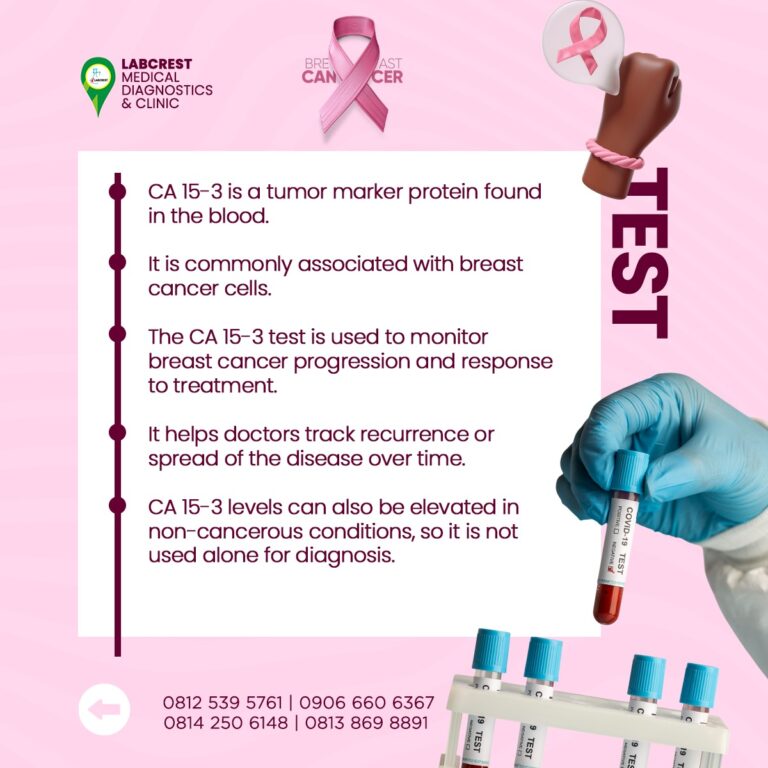
CA 15-3 is a tumor marker protein found in the blood. It is commonly associated with breast cancer cells.
The CA 15-3 test is not typically used to diagnose breast cancer on its own. Instead, it plays a key role in:
Monitoring breast cancer progression
Evaluating response to treatment
Detecting possible recurrence
Tracking spread of the disease over time
Doctors often measure CA 15-3 levels periodically during and after treatment to assess how well therapy is working.
Important to Know
While CA 15-3 is linked to breast cancer, elevated levels can also occur in certain non-cancerous conditions. Because of this, the test is not used alone for diagnosis. It is interpreted alongside imaging tests, physical examinations, and other laboratory results.
Take Charge of Your Health
Breast cancer awareness empowers individuals to seek timely screening and medical care. If you notice any changes in your breast—such as a lump, unusual discharge, skin changes, or persistent pain—consult a healthcare professional promptly.
Regular check-ups, early detection, and proper monitoring tools like the CA 15-3 test can make a significant difference in outcomes.
Your health matters. Stay informed. Get screened. Act early.

Leave a Reply